Blog/
Horizontal rig vs vertical rig: how to tell them apart in satellite imagery
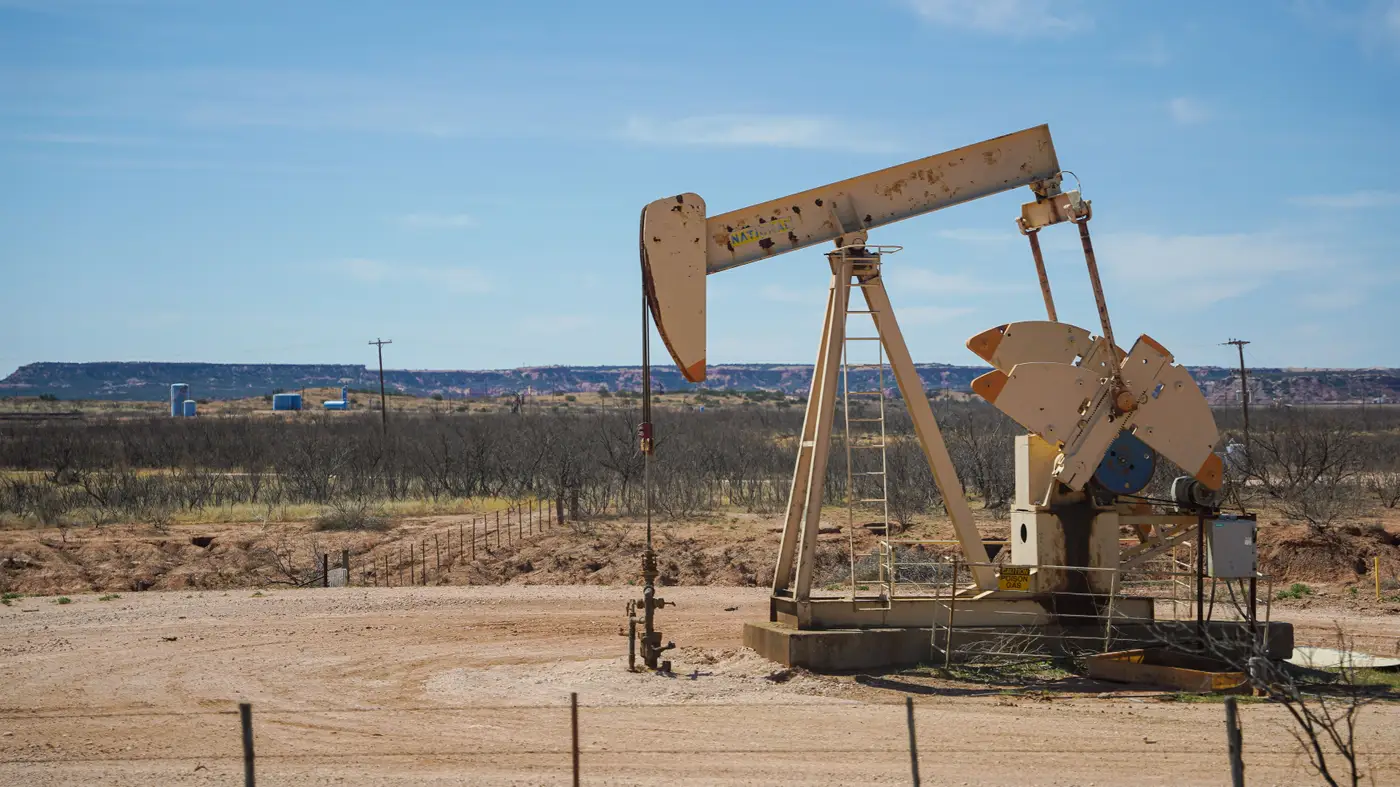
If you're staring at a 30 cm pass over a pad and trying to figure out whether that's a horizontal rig spudding a two-mile lateral or a vertical hole going in for a water source well, the mast and substructure give you most of what you need. You don't need the permit filing to know which.
What the mast height tells you
Horizontal rigs built for unconventional laterals run tall masts, typically 140 to 190 feet, because they're pulling stands of pipe to drill a long lateral section and need the derrick capacity to handle triple or quad stands. On an overhead pass, mast height shows up as shadow length. A rig casting a shadow well beyond its substructure footprint, especially on a morning or late-afternoon pass, is almost always a horizontal-capable rig. A shorter mast, the kind on vertical conventional wells or simple workover rigs, casts a stub of a shadow that barely clears the substructure.
Vertical rigs, especially older trailer-mounted or smaller workover units common in legacy conventional basins (think shallow Permian zones, parts of the Illinois Basin, stripper well country), run masts in the 80 to 110 foot range. From orbit that's a visibly smaller shadow and usually a smaller rig package overall: fewer support vehicles, no walking system, no top-drive housing bulge up at the crown.
Substructure footprint and pad layout
The substructure is the bigger tell once you've got a consistent cadence of passes over a basin. Horizontal rigs sit on a substructure built to handle the loads of drilling multiple wells from one pad. Fifteen to twenty-five thousand square feet of cleared, graded pad is typical for a modern horizontal multi-well pad in the Permian or the Bakken. You'll see the rig itself, a mud system, pipe racks laid out for multiple laterals, and often a second or third wellhead cellar already cut into the pad before spud. A single vertical rig usually sits on a much smaller cleared footprint, often under five thousand square feet, with no multi-well staging because there's only one hole going in.
Frac spread presence is the other piece of the puzzle. If you're seeing a rig on a pad and, a county over or on an adjacent pad in the same basin, a cluster of pump trucks, sand silos, and a flowback setup, that's corroborating evidence for horizontal development rather than a vertical infill program. Vertical wells rarely get the multi-stage frac treatment, so a vertical rig pad usually doesn't have a frac crew queued up nearby.
Reading an unknown rig in one pass
With a single pass to work from, run the checklist in this order: shadow length relative to substructure size, cleared pad acreage, number of wellhead positions or cellars prepped, and whether there's frac equipment staged within a few miles on the same lease. Any one of these alone can mislead you. A short shadow might just mean a midday pass with the sun near zenith. Two or three of them pointing the same direction is enough to call it with confidence.
Getting this call right changes what a basin's rig count is actually telling you. A basin adding vertical rigs is usually holding legacy production flat, patching older wells rather than drilling new development. A basin adding horizontal rigs with frac spreads following close behind is pulling in completions crews and sand trucks behind it, which is the signal that precedes a real jump in output. Lump the two types into one undifferentiated rig count and you blur the exact distinction a forecast needs.
Calling rig type pass by pass is fine for a spot check, but it gets tedious fast if you're tracking a whole basin month over month. Drilling Activity turns a named AOI into a running monthly count of pads, rigs, and frac spreads, so you're watching the trend instead of squinting at shadows on one scene.
Set up an AOI for your basin and watch the count build month to month.